
The Short Answer
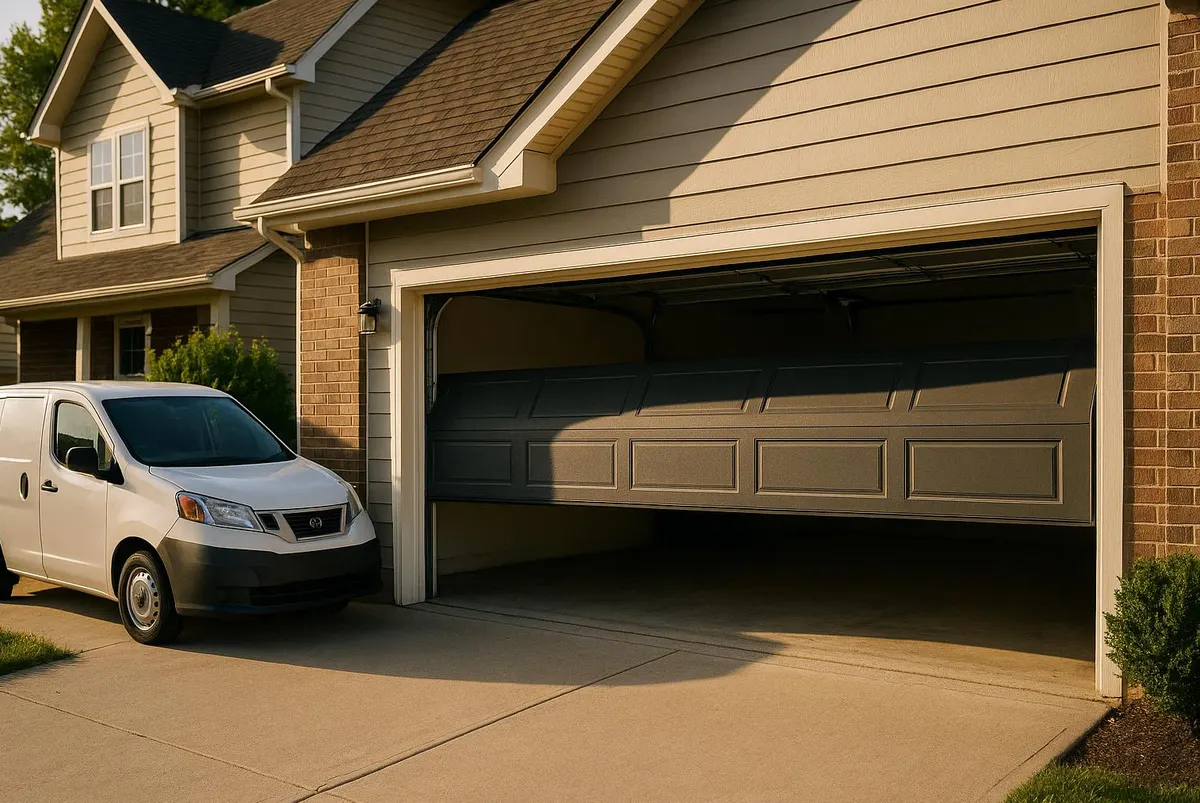
Your garage door is almost always the largest single opening in your home's exterior wall, and it's built to roll up and down rather than resist a direct hit of wind pressure. When it fails in a storm, the whole structure is at risk because wind that gets inside a garage pushes up on the roof and out on the walls from the inside. The fix is a combination of checking your door's hardware condition now, reinforcing it if it's older or undersized, and knowing the pre-storm steps that reduce pressure on it in the moments before a front moves through.
Why the Garage Door Fails First
Every other wall in your house is a solid, continuous surface tied into the framing. A garage door is a large panel held in place by rollers, tracks, hinges, and a spring system doing double duty as both a moving part and a structural barrier. Standard residential doors, especially ones installed more than a decade ago, often were not engineered with high wind-load ratings in mind. Once wind gets a door flexing, it can pop rollers out of the track, bend panels, or in the worst cases blow the entire door inward. From that point, the wind pressure inside the garage has nowhere to go but up and out, which is how storms turn a damaged garage door into roof and wall damage.
Why This Matters Going Into Late Fall
Northwest Indiana gets a real mix of severe weather risk through the year, and this stretch of fall is a practical window to deal with it. Strong frontal systems moving through in October and November can bring sudden wind gusts well ahead of the colder, icier weather that typically settles in for winter. Getting the door squared away now means it's ready for those fall wind events, and it's also one less thing to worry about once ice and road salt start taking a toll on tracks, hinges, and openers through the winter months. It also puts you ahead of spring, when this region's storm and tornado season brings the highest wind risk of the year.
Signs Your Door Is More Vulnerable Than It Should Be
- Visible daylight around the edges of a closed door, which means it isn't sealing tightly against the frame.
- Panels that flex or bow noticeably when you push on them from outside.
- Rollers that have jumped the track before, even briefly, which is a sign the track alignment or roller condition is already marginal.
- A door that shudders or rattles in ordinary wind, which usually points to loose hardware or worn weatherstripping.
- An opener that struggles or reverses unexpectedly, which can mean the door is heavier or more resistant to move than it should be, often from spring issues.
- Visible rust or corrosion on hinges, tracks, or the bottom panel, common after a winter of road salt exposure that weakens metal over time.
Concrete Steps to Brace Your Door
Check and tighten the hardware
Hinges, roller brackets, and track bolts loosen gradually with normal use. A simple pass with a wrench to snug everything up, and a visual check for cracked or bent brackets, takes less than half an hour and catches a lot of problems before they become failures.
Inspect the tracks
Tracks should be straight, free of dents, and properly aligned so rollers sit solidly inside them. A track that's slightly bent from a bump or years of settling gives wind far more leverage to pop the door loose.
Look at the springs
Springs under tension that are worn, rusted, or mismatched to the door's weight put extra strain on the opener and the rest of the hardware during wind events, since the door isn't moving or holding the way it was designed to. Spring replacement is not a DIY-friendly repair given the tension involved, but a failing spring is worth flagging before storm season, not after.
Consider reinforcement if the door is older or oversized
Wider double-car doors flex more under wind load than single doors. Reinforcement kits (horizontal struts bolted across the panels) and wind-rated replacement doors exist specifically for homes in wind-exposed areas, and they're worth a real conversation if your current door predates current wind-load standards. National material costs for strut kits typically run in the range of $100 to $300, while a full wind-rated replacement door is a larger investment, generally a few thousand dollars depending on size and materials.
Before the Storm Hits
- Close and latch the door fully; a door that's even slightly ajar loses most of its wind resistance.
- Clear the tracks of debris, leaves, or ice so the door can seal properly.
- Move vehicles and anything flammable or valuable away from the garage door side if a tornado warning is active.
- If you have advance notice of a major wind event, avoid opening the door unnecessarily until it passes.
- After the storm, check the door's operation and look for new gaps, bent panels, or rollers out of alignment before you assume everything is fine.
When to Call Crown Point Garage Door
If your inspection turns up a bent track, a door that won't seal evenly, or springs that look worn or mismatched, that's the point to call rather than keep adjusting it yourself. Our garage door maintenance service covers a full hardware check, track alignment, and lubrication, which catches most wind-vulnerability issues before they become emergencies. If a spring has already failed or a storm has knocked the door off track, our spring replacement and emergency garage door service get you back to a secure, properly functioning door without the guesswork or the risk of handling spring tension on your own.
If you're in Crown Point, Merrillville, Schererville, Winfield, Cedar Lake, Lowell, Dyer, or St. John and want your garage door checked out before the next round of wind and storms, call Crown Point Garage Door and we'll get it squared away.